Why Incontinence Care Is a Critical Procurement Category
Incontinence care products — including underpads, bed pads, and protective liners — represent one of the highest-volume consumable categories in any healthcare facility. For hospitals, nursing homes, and long-term care centers, the choice between disposable and washable products has significant implications for infection control, staffing costs, patient comfort, and overall operating budget.
With the global aging population driving a 7% annual increase in demand for incontinence products, procurement teams need a clear understanding of the options available and the trade-offs involved. This guide breaks down the key considerations to help you make informed sourcing decisions.
Product Categories in Incontinence Care
Newrise Medical's incontinence care product line covers the full spectrum of patient protection needs. Understanding each category helps procurement teams match the right product to the right care setting:
Disposable Underpads
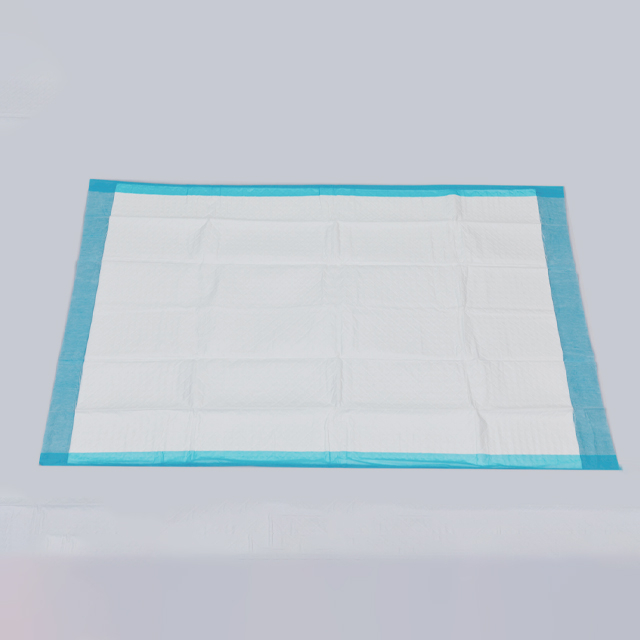
Disposable underpads are single-use absorbent pads placed beneath patients to protect bedding and furniture from moisture. They feature a multi-layer construction: a soft non-woven top layer for patient comfort, an absorbent core (typically fluff pulp or SAP), and a waterproof PE film backing to prevent leakage.
Available in multiple sizes (45×60cm, 60×60cm, 60×90cm) and absorbency levels, disposable underpads are the go-to solution for hospitals, ICUs, and emergency departments where infection control is paramount and laundry logistics are impractical.
Washable Underpads
A washable underpad (also called a reusable incontinence pad) offers a cost-effective alternative for long-term care settings. Made from durable, machine-washable fabrics, these pads can be laundered and reused hundreds of times, significantly reducing per-use costs over the product lifecycle.
The washable underpad typically features a quilted top surface, a waterproof TPU or PE backing, and a highly absorbent inner layer. They are ideal for home care, nursing homes with on-site laundry, and facilities focused on environmental sustainability.
Incontinence Bed Pads
The broader category of incontinence bed pad products includes both disposable and washable variants, as well as specialized products like chair pads, wheelchair pads, and fitted sheet-style protectors. The key differentiator is the application scenario and required absorbency level.
Material Comparison: Choosing the Right Construction
The material composition of incontinence care products directly affects performance, comfort, and cost. Here's a comparison of the most common materials used:
| Material | Type | Best Use | Key Characteristics |
|---|---|---|---|
| Non-Woven (Spunbond) | Top layer | Disposable underpads | Soft, breathable, cost-effective. Provides a smooth surface against skin. |
| Airlaid Pulp | Absorbent core | High-absorbency products | Excellent liquid retention, fluff-based structure, superior absorbency per gram. |
| Spunbond Non-Woven | Top/backing layer | Washable and disposable | Durable, tear-resistant. Good for products requiring structural integrity. |
| PE Film | Waterproof backing | Both disposable and washable | 100% waterproof barrier. Thin, lightweight, and prevents moisture migration. |
| SAP (Super Absorbent Polymer) | Absorbent additive | Premium disposable underpads | Locks moisture in gel form. Dramatically increases absorbency without adding bulk. |
| TPU Membrane | Waterproof backing | Washable underpads | Breathable yet waterproof. More durable than PE for repeated laundering cycles. |
Disposable vs. Washable: The Cost Analysis
The decision between disposable underpads and a reusable incontinence pad often comes down to total cost of ownership rather than unit price alone. Here's a simplified comparison:
| Factor | Disposable Underpads | Washable Underpads |
|---|---|---|
| Unit Cost | Lower ($0.10–$0.30/pad) | Higher ($3–$8/pad) |
| Usable Lifespan | Single use | 100–300 wash cycles |
| Laundry Cost | N/A | $0.50–$1.50 per wash cycle |
| Cost per Use | $0.10–$0.30 | $0.02–$0.05 (at 200 washes) |
| Infection Risk | Lowest (single-use) | Moderate (requires proper laundering) |
| Environmental Impact | Higher (waste generation) | Lower (reusable) |
"The most cost-effective incontinence care strategy often uses both: disposables for high-risk clinical settings and washables for stable, long-term care environments." — Healthcare Procurement Journal, 2025
Procurement Recommendations by Setting
Hospitals and Acute Care
- Prioritize disposable underpads with SAP for maximum absorbency and infection control
- Stock multiple sizes — 60×90cm for beds, 45×60cm for chairs and stretchers
- Consider bulk purchasing agreements for cost savings on high-volume usage
Nursing Homes and Long-Term Care
- A reusable incontinence pad program can reduce per-patient supply costs by 40–60%
- Maintain a 3:1 ratio (in-use : in-laundry : in-stock) to ensure continuous availability
- Supplement with disposable options for high-acuity residents or during laundry downtime
Home Care and Personal Use
- A washable underpad is typically the most economical choice for home care
- Keep a small supply of disposable underpads for travel and emergencies
- Look for machine-washable products with TPU backing for durability
💡 Key Takeaway for Buyers
- Hospitals: disposable underpads with SAP for infection control and efficiency
- Nursing homes: washable underpads for cost savings, backed by disposable stock
- Home care: washable underpads for daily use, disposables for portability
- Newrise Medical offers the full range — from economy disposable underpads to premium washable underpads — with OEM customization available
Newrise Medical's Incontinence Care Lineup
At our 40,000㎡ ISO 13485-certified facility in Changzhou, Newrise Medical manufactures a comprehensive range of incontinence care products including:
- Disposable underpads — Multiple sizes and absorbency levels with non-woven, spunbond, and airlaid options
- Washable underpads — Quilted, TPU-backed, machine-washable up to 300 cycles
- Incontinence bed pads — Full range from economy to premium, disposable and reusable
- Custom OEM products — Tailored sizes, materials, absorbency, and packaging to your specifications
All products are manufactured under CE and FDA registered conditions, with full quality traceability from raw materials to finished goods.
Final Thoughts
Choosing the right incontinence care products isn't a one-size-fits-all decision. The best procurement strategy considers the care setting, infection control requirements, laundry infrastructure, patient population, and total cost of ownership — not just the sticker price per unit.
Newrise Medical's 20+ years of manufacturing experience in disposable medical and hygiene products positions us as a trusted partner for facilities and distributors worldwide. Whether you need standard products or custom OEM solutions, our team can help you find the right incontinence care solution for your needs.